Pular para o conteúdo principal

Der Antichrist


No gods, no leaders, no prophets telling my future

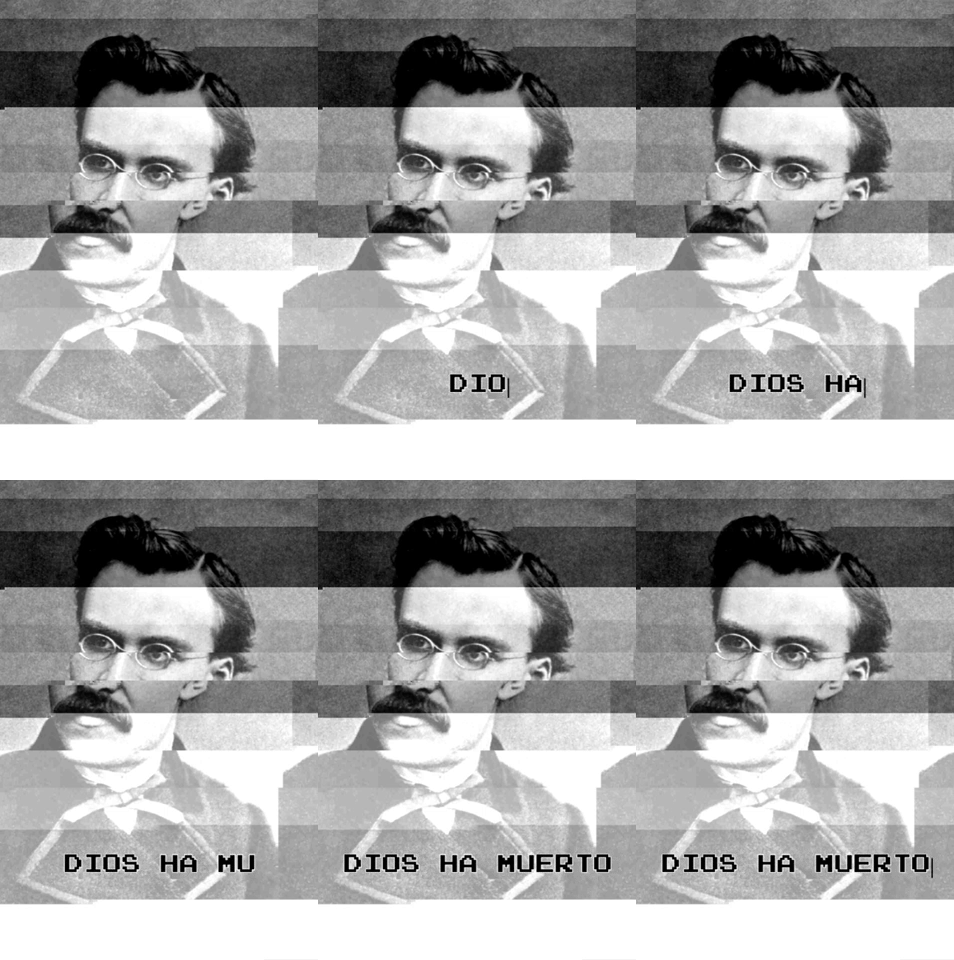
O que nos distingue não é nossa incapacidade de encontrar Deus, nem na história, nem na natureza, nem por detrás da natureza – mas que consideramos tudo que foi honrado como sendo Deus, não como algo “divino”, mas lastimável, absurdo, nocivo; não como um simples erro, mas como um crime contra a vida... Negamos que esse Deus seja Deus... E se alguém nos mostrasse esse Deus cristão, ficaríamos ainda menos inclinamos a crer nele. – Numa fórmula: Deus, qualem Paulus creavit, Dei negatio. – Uma religião como o cristianismo, que não possui um único ponto de contato com a realidade, que se esfacela no momento em que a realidade impõe seus direitos, inevitavelmente será a inimiga mortal da “sabedoria deste mundo”, ou seja, da ciência – nomeará bom tudo que serve para envenenar, caluniar e depreciar toda disciplina intelectual, toda lucidez e retidão em matéria de consciência intelectual, toda frieza nobre e liberdade de espírito. A “fé”, como um imperativo, veta a ciência – in praxi, mentir a todo custo... Paulo compreendeu muito bem que a mentira – que a “fé” – era necessária; e posteriormente a Igreja compreendeu Paulo. – O Deus que Paulo inventou, um Deus que “reduz ao absurdo” a “sabedoria deste mundo” (especialmente as duas grandes inimigas da superstição, a filologia e a medicina), é em verdade uma indicação da firme determinação de Paulo para realizar isto: dar o nome de Deus à sua própria vontade, thora – isso é essencialmente judaico. Paulo quer desvalorizar a “sabedoria deste mundo”: seus inimigos são os bons filólogos e médicos da escola alexandrina – a guerra é feita contra eles. De fato, nenhum homem pode ser filólogo e médico sem ao mesmo tempo ser anticristo. O filólogo vê por detrás dos “livros sagrados”, o médico vê por detrás da degeneração fisiológica do cristão típico. O médico diz “incurável”; o filólogo diz “fraude”...

Friedrich Nietzsche
1844 - 1900

Postagens mais visitadas deste blog

A Modest Proposal

For preventing the children of poor people in Ireland, from being a burden on their parents or country, and for making them beneficial to the publick. Jonathan Swift | 1729 It is a melancholy object to those, who walk through this great town, or travel in the country, when they see the streets, the roads, and cabbin-doors crowded with beggars of the female sex, followed by three, four, or six children, all in rags, and importuning every passenger for an alms. These mothers, instead of being able to work for their honest livelihood, are forced to employ all their time in stroling to beg sustenance for their helpless infants who, as they grow up, either turn thieves for want of work, or leave their dear native country, to fight for the Pretender in Spain, or sell themselves to the Barbadoes. I think it is agreed by all parties, that this prodigious number of children in the arms, or on the backs, or at the heels of their mothers, and frequently of their fathers, is in the present dep...

Ouvindo o silêncio

Comumente pensamos no silêncio como negativo, a mera ausência de som. Silêncios - é melhor pensar no plural -  podem ser longos ou curtos. Diferem em qualidade, bem como em quantidade. Podem ser naturais ou culturais, por exemplo, normais ou patológicos. Podem ser voluntários ou forçados, espontâneos ou estratégicos, quentes ou frios - como os ingleses às vezes dizem, "um silêncio de pedra". A ausência de fala pode igualmente expressar reserva ou humildade. Um silêncio desdenhoso ou insolente precisa ser distinguido de um silêncio ameaçador. As pessoas ficam sem fala por espanto, constrangimento ou até fúria. Em suma, o silêncio não é um fenômeno puramente negativo. O silêncio do professor experimentado é diferente também dos exemplos que acabei de citar. É a arte de fazer uma pergunta difícil e então dar ao aluno tempo suficiente para meditar, para elaborar uma resposta. Nos mosteiros zenbudistas, assim contam, o professor é preparado para esperar anos por uma boa resposta. ...

Socialism and religion

Present-day society is wholly based on the exploitation of the vast masses of the working class by a tiny minority of the population, the class of the landowners and that of the capitalists. It is a slave society, since the “free” workers, who all their life work for the capitalists, are “entitled” only to such means of subsistence as are essential for the maintenance of slaves who produce profit, for the safeguarding and perpetuation of capitalist slavery. Religion is one of the forms of spiritual oppression which everywhere weighs down heavily upon the masses of the people, over burdened by their perpetual work for others, by want and isolation. Impotence of the exploited classes in their struggle against the exploiters just as inevitably gives rise to the belief in a better life after death as impotence of the savage in his battle with nature gives rise to belief in gods, devils, miracles, and the like. Those who toil and live in want all their lives are taught by religion to be sub...